


The trail dust is still on your boots, salt is drying at your ankles, and the airport shuttle smells faintly of sunscreen, coffee, and somebody's overpacked ski bag. You're headed toward the first drink, the tailgate, or the cabin deck. A good tee should help you arrive socially confident, not make you wrestle with a sagging pocket while everyone else finds the cooler.
That's the point of men's T-shirts with pockets. The pocket isn't decoration. It's a small piece of Social Technical design that should help you holster your tech, carry the little things, and stay present for the serendipitous encounters that happen after the activity. The right shirt disappears into the moment.
Stepping Off the Trail and Into the Pocket Tee Moment
You come off the trail with grit in your cuffs, sunglasses fogged from the climb, and a hotel key card that has somehow migrated to the bottom of your shorts. At the beach, sand sticks to your ankles while your phone sits somewhere inside a damp backpack. In the back row of an Uber from the airport, you're trying to hold a passport, boarding pass, and coffee without looking like you packed for an expedition.
A chest pocket earns its place. A well-built pocket keeps a key card from sliding out during a beach sprint. It gives a festival wristband somewhere to go besides around your forearm, where it scratches every time you move. It lets you wipe your sunglasses and store them without opening a backpack or interrupting a conversation.
The bad version creates its own weather system. A floppy pocket swallows your phone and pulls the front panel out of shape. An over-stretched neckline shifts when a wallet slides in. A pocket sewn too tightly can tear the first time you make a quick grab. None of that feels useful at the tailgate, and none of it looks relaxed at dinner.
The practical rule: a pocket tee should make the next hour easier, not advertise that you're carrying something.
Pocket placement, depth, and reinforcement matter before color or logo. Clothing pockets have a long history as practical storage, with separate carrying bags used for tools as early as the 15th century, long before the modern T-shirt existed. ShirtMax's history of shirt pockets explains how shirt pockets became a safer, more convenient place for small items.
The modern pocket tee sits at the seam between adventure and social life. For more ideas on making that transition comfortable, keep post-surf comfort clothing in mind. The best shirt isn't the one with the most storage. It's the one that carries what you need, stays flat when empty, and lets you forget it's there.
The Three Pocket Styles That Actually Earn Their Place
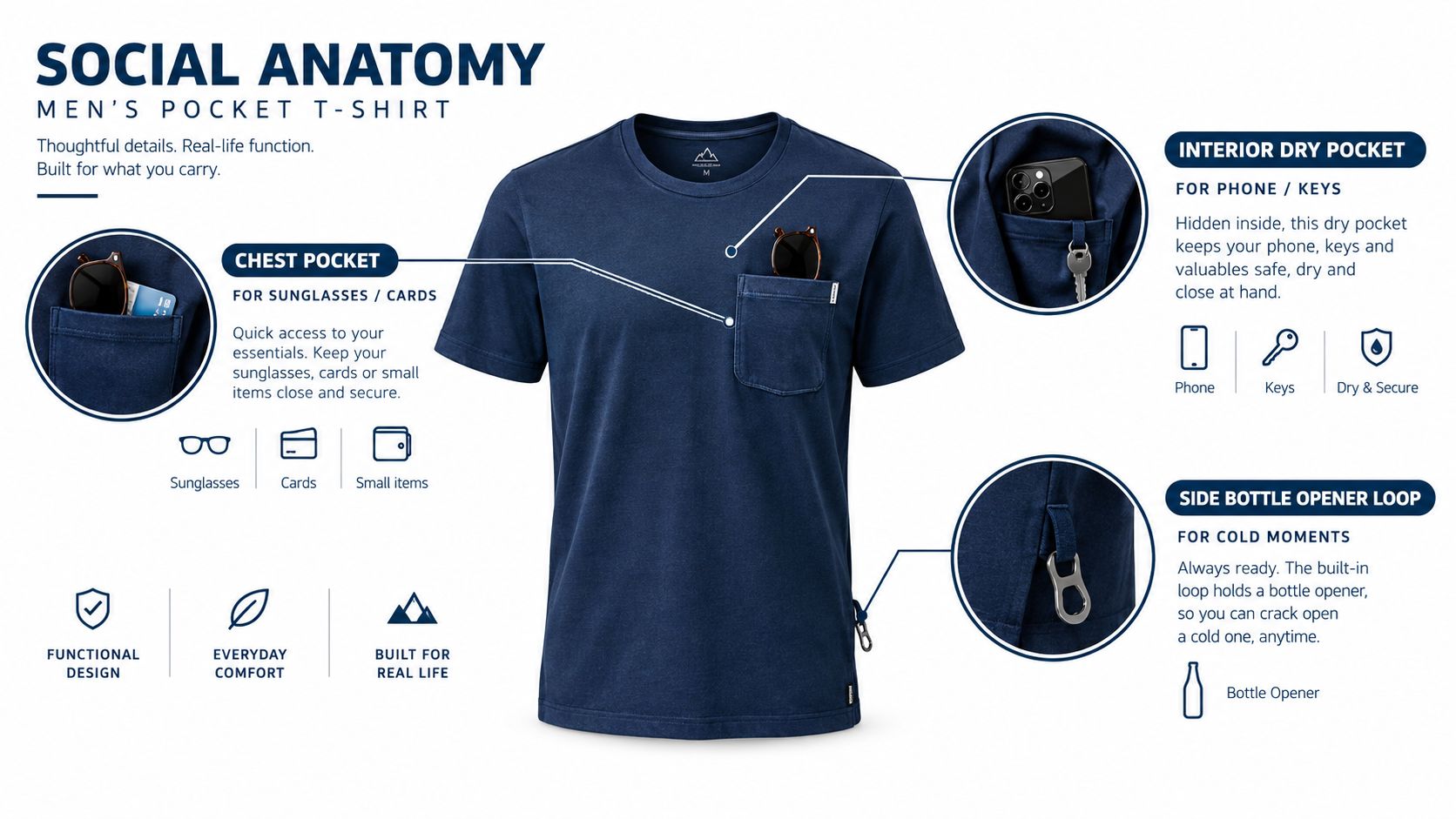
A product page should tell you more than “pocket tee.” Look for the construction, the location, and the kind of load the shirt can handle. These are the three styles worth separating.
Visible chest pockets
The classic left-chest pocket works because it's simple. It gives you quick access to sunglasses, a pen, folded notes, or a card without turning the shirt into a utility vest. The best versions use a mid-weight cotton jersey, with a stable knit that doesn't ripple when the pocket is attached.
Look for reinforced pocket stitching, clean corners, and an opening that stays wide enough for hand access. The left-chest position became standard because it looks neat and keeps small items close to the upper body, particularly for right-handed wearers. Gear Patrol's pocket T-shirt history traces the modern design milestone to August 16, 1929, when John W. Champion filed a patent for a utility shirt with asymmetrical chest pockets.
Hidden or concealed pockets
A hidden pocket puts the pocket bag inside the shirt while keeping the outside visually clean. That's useful on travel days, crowded venues, and airport-to-anchor itineraries when you want a card or passport close without broadcasting where it is.
The tradeoff is access. If the opening sits too low or behind a jacket layer, the pocket stops being practical when you're seated. Check the opening position while standing and sitting. Hidden pocket shirt guidance is useful if discreet carry matters more to you than a visible heritage look.
Reinforced pockets
Reinforced pockets are designed for more frequent use. Corners may receive bartack stitching, the opening can use a double-needle finish, and some designs add a gusset to give the pocket bag more room without forcing the front panel to stretch.
This style makes sense for commuting, workwear, and travel days where the pocket will be opened repeatedly. It also works for a playful graphic layer, such as this funny Western holiday tee, provided the pocket construction still lays flat. A novelty print can start the conversation. Good stitching keeps it going.
Matching Pocket Placement to Real After-Adventure Moments
The right placement depends on the hour after the activity. Don't buy the pocket that looks clever online. Buy the one that solves your most common transition.
| Placement | Best For | Carry Capacity | Discretion | After-Adventure Scenario |
|---|---|---|---|---|
| Left chest | Tailgates, breweries, boardwalk dinners | Light items | Moderate | Sunglasses, cards, pen, folded notes |
| Dual chest | Festivals, long lunches, active workdays | Light to moderate | Low | Wristband, notes, small personal items |
| Side or hand-style | Beach-to-bar transitions | Moderate | Moderate | Phone or keys when you want hands free |
| Hidden or zippered interior | Airports, road trips, crowded venues | Small valuables | High | Passport, cards, keys, travel documents |
The left chest remains the versatile default. It's easy to reach, familiar, and balanced under an overshirt or casual jacket. It suits the tailgate where you want a card or sunglasses nearby, then looks natural when the group moves to a brewery.
Dual chest pockets earn their keep when the day stretches. A festival weekend, a hike that turns into a long lunch, or a bartending shift can justify the extra storage. Just remember that two loaded pockets change the visual weight of the shirt. Keep the fit relaxed enough that the front doesn't look crowded.
Side pockets are rarer on tees, but they're useful for the beach-to-bar handoff. A side-entry design can secure a phone or keys while keeping both hands available for a drink, a towel, or the person you came to see. The pocket must be stabilized, though. Otherwise, the shirt's drape starts pulling sideways.
Hidden or zippered interior pockets suit airport-to-anchor days. They're discreet in a crowd and valuable on road trips, but only if you can reach them while seated. Test the opening with your torso bent, your arms relaxed, and a jacket layered over the tee.
Carry capacity should follow your actual afternoon. If you usually need a card and sunglasses, a left chest pocket works. If you're carrying a phone, keys, and travel documents, look for separate interior storage.
Fabric and Construction Details That Decide If It Lasts
Pocket tees fail when the fabric can't support the pocket. Lightweight jersey feels comfortable at first, but an attached pocket adds stress to the knit. Heavier cotton or cotton-rich jersey generally gives the pocket a more stable foundation, especially when the shirt will be washed and worn repeatedly. HiConsumption's pocket tee guide highlights heavyweight construction, ring-spun or combed cotton, and reinforced stitching as practical durability upgrades.
Treat GSM as a clue, not a promise. The ranges below are useful buying language, but the seam work and fiber blend still decide how the garment behaves.
| Weight Tier | Typical GSM | Best Fiber | Pocket Stitching | Best For |
|---|---|---|---|---|
| Lightweight | 160 to 180 | Cotton or soft blend | Clean single or narrow double needle | Hot beach days and layering |
| Midweight | 200 to 220 | Cotton or cotton-modal | Reinforced corners and stable opening | Daily wear, travel, beach-to-bar |
| Heavyweight | 240 and above | Dense cotton or cotton-rich jersey | Bartacks, double needle, reinforced mouth | Workwear, cool evenings, frequent carry |
Midweight cotton is the safest all-around choice. It holds its shape without feeling like armor and gives a reinforced pocket enough structure to stay useful. Tri-blends can be wonderfully soft, but softness alone doesn't guarantee a stable pocket. If the shirt feels thin and stretchy, keep the load light.
Inspect four stress points before buying. Check the pocket corners for bartacks or dense stitching. Look at the pocket mouth for reinforcement. Follow the shoulder seam to see whether it's taped or stabilized. Then compare the pocket bag width with the opening, because a deep bag is useless if your hand can't enter comfortably.
This short-sleeve T-shirt guide is a useful reference when you're comparing everyday jersey options. Climate matters, too. Slub cotton can feel airy and textured in San Diego fog, while a dense heavyweight knit can feel excessive in Phoenix heat. Choose the fabric for the actual place you'll wear it, not the imaginary lifestyle in the product photos.
Why Pocket Tees Are Splitting and Shifting in 2026
Pocket tees are separating into two camps. One leans toward heritage workwear, with visible chest pockets, sturdy cotton, and a clear connection to old utility clothing. The other favors technical lifestyle design, with concealed storage, lighter performance fabrics, and details intended for travel, festivals, and hands-free socializing.
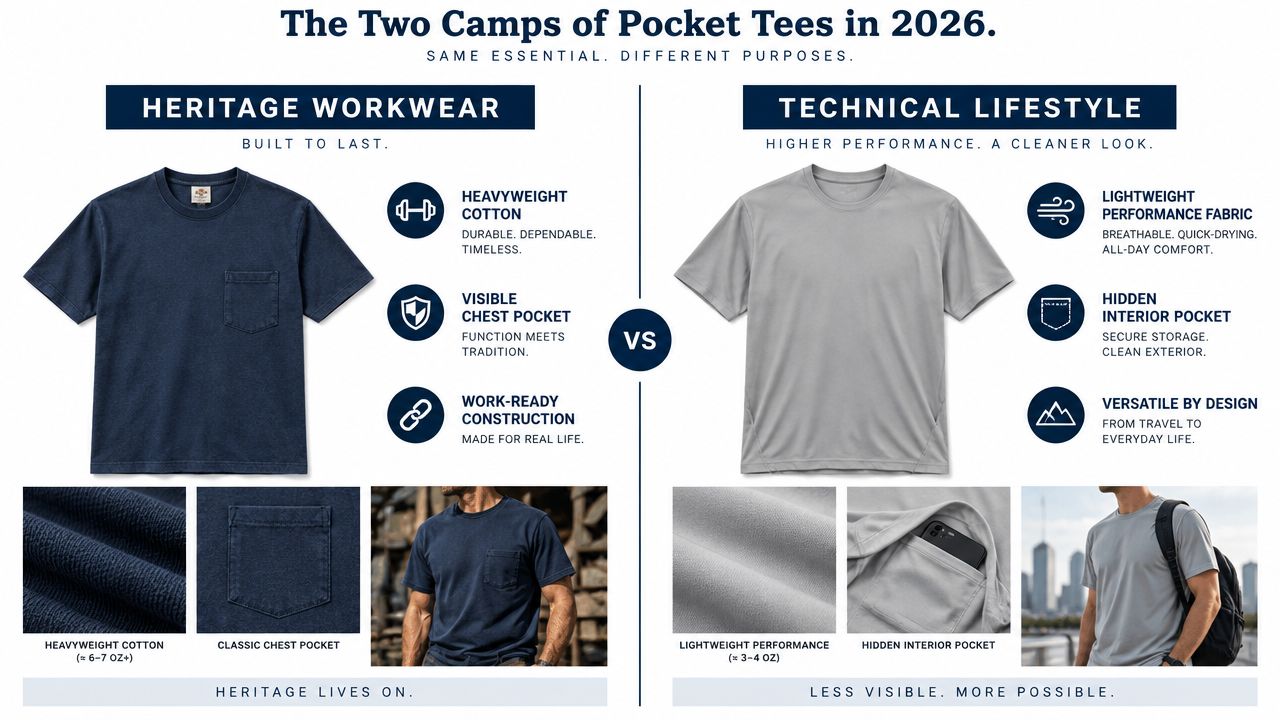
The split makes sense. Heritage shirts photograph well because the pocket is visible and familiar. They work with denim, boots, work jackets, and cabin wear for men. They can also feel under-equipped when you're moving through an airport or carrying a phone through a crowded festival.
Technical tees address the carry problem with less conspicuous ease. A hidden pocket can keep a passport or card close, while performance fabric suits warm travel days and active commutes. The downside is visual. A technical shirt can read plain, even when the engineering is doing real work.
Current fashion coverage reflects that tension. Who What Wear's 2026 T-shirt trend coverage presents pocket tees as dated in some trend-led contexts while other guides continue to treat them as classic and versatile. The useful conclusion isn't that one side has won. It's that context decides whether the pocket feels current.
A pocket tee looks modern when its silhouette, fabric, and setting agree with each other.
For a mountain weekend, a heavyweight visible pocket feels right under a flannel or outer layer. For an airport, festival, or post-surf afternoon, concealed storage can make more sense. Life Offline lifestyle gear captures the broader idea. Clothing should support real-world connection without turning every outfit into a gadget display.
Choose deliberately. If you want heritage character, buy the sturdy cotton pocket and accept its lighter carry limits. If you want discreet utility, choose the technical option and style it with stronger accessories, texture, or an overshirt so it doesn't disappear into generic gym wear.
How to Choose and Style a Men's T-Shirt with Pocket
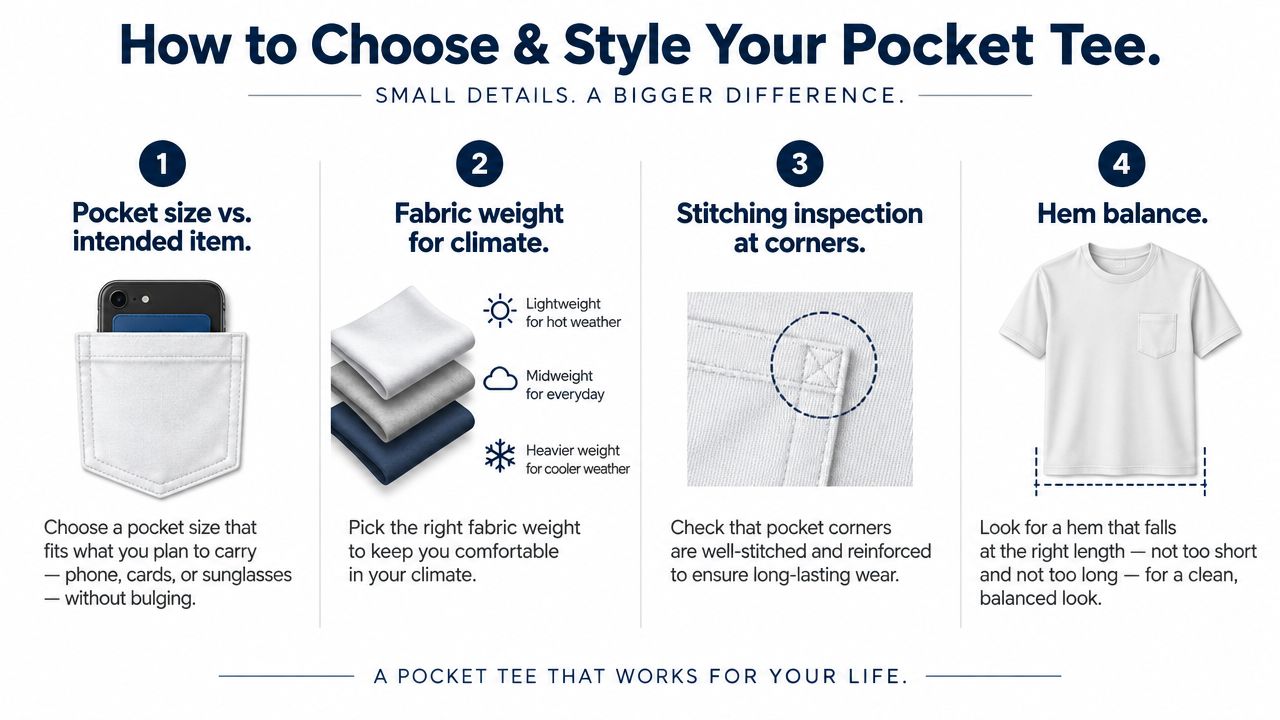
Run this checklist before you buy. It takes less time than deciding whether the beach bar is close enough to walk to.
- Match pocket size to the item: A card pocket shouldn't be asked to hold a phone, and a sunglasses pocket shouldn't swallow your keys.
- Match fabric weight to climate: Choose lighter jersey for humid heat and a denser cotton for cool evenings, travel, and layering.
- Inspect the corners: Look for reinforcement where the pocket meets the chest, especially if you'll use it often.
- Check the hem balance: The shirt should hang cleanly when the pocket is empty and remain comfortable when lightly loaded.
- Test the fit through the chest: A roomy pocket doesn't help if the shirt is too tight and pulls every time you move.
- Choose a color with range: Navy, white, black, washed gray, sand, and olive can move from denim to swim trunks to relaxed tailoring.
Casual without looking overworked
Start with a white pocket tee, raw denim, and low-profile sneakers. Keep the pocket lightly loaded or empty. The look works because the visible detail adds texture without competing with the jeans.
A relaxed fit is better than a tight fit here. You want enough room for the tee to hang naturally, but not so much fabric that the pocket drifts toward your side seam. For more combinations that work beyond the beach, see outfit styles for guys.
Beach to bar
Wear the pocket tee untucked over swim trunks. Add a linen overshirt and leather sandals, then swap to sneakers when the evening gets moving. A terry-lined shirt can make this transition especially comfortable because terry's looped cotton or cotton-blend construction is soft and absorbent, as described in J.Crew's terrycloth shirt overview.
For a wider take on relaxed, enduring clothing, the McLaren Vale Cellars style guide offers useful context on vintage-inspired dressing without requiring a costume.
Festival with the phone problem solved
Choose a darker tee with a hidden zip pocket, utility shorts, and a crossbody bag for anything the shirt shouldn't carry. Keep sunglasses on the collar only when they're secure. A pocket tee should reduce your bag dependence, not turn the neckline into a crowded key rack.
For a visual walkthrough of the approach, this video gives the styling a little more room to breathe.
Pick the tee that disappears into the moment after the activity, not the one that looks best hanging on a store wall.
Why Most Pocket Tees Underdeliver and What Social Technical Changes
Most pocket tees fail in predictable ways. The knit is too light, so the pocket bags out as soon as you add sunglasses or a key card. A side-entry pocket warps the front panel. A hidden zip pouch sits so low that you can't reach it comfortably once you're seated.
The first weak point is usually the pocket corner. That small area receives repeated pulling, especially when the pocket opening is narrow and the object inside is rigid. Manufacturers can add reinforcement, but too much stiffness makes the chest panel feel more like a uniform than casual clothing.
The Social Technical approach flips the priority list. Start with the life the garment has to support, then build the pocket into the shirt rather than placing a decorative shape on top of it. The result should feel natural when you're walking from the beach, standing at a tailgate, or sitting on a cabin deck after the lifts close.
Design the pocket around real carry
A pocket should have a job. If it's for sunglasses, give it a stable opening and enough depth to keep the glasses from tipping out. If it's for a phone, stabilize the bag and make sure the shirt fabric can support the weight without stretching across the chest. If it's for a passport or cards, place the opening where you can reach it while seated.
Technical pocket design also depends on the bag shape, attachment points, and reinforcement. Fitinline's pocket construction guidance emphasizes testing hand entry, sitting, walking, and object carry because those movements reveal puckering, sagging, and stress concentration.
Keep function from becoming costume
The best functional details don't dominate the outfit. They disappear when empty and become useful only when you need them. That might mean a hidden dry pocket for a phone, a sunglass loop, or a bottle opener loop placed where your hand naturally goes. A classic cabana shirt shows the same principle in another category, pairing a printed outer shell with terry-cloth toweling inside and often exposing terry at the pocket edges. BAMF Style's cabana-shirt breakdown treats those details as part of the garment's function, not just its decoration.
Some terry shirts push the concept further with ventilation and multiple storage points. One product listing includes a 10-inch front zipper and three open rear pockets, demonstrating how casual clothing can combine airflow and carry features without becoming technical outerwear. The product details at Dick's Sporting Goods show the kind of specification worth checking when you want apparel for warm, active transitions.
California Cowboy's men's collection includes pocket tees alongside shirts designed with features such as a beer bottle pocket and sunglass loop. That makes California Cowboy a relevant place to compare Social Technical design with more conventional men's T-shirts with pockets.
Choose one pocket tee for the week you live. Wear it from the trailhead to the first round, from salt water to the taco stand, or from the airport to the cabin deck. Then complete the look with a practical hat, a relaxed layer, and a koozie that keeps the conversation going while you holster your tech. Join the Vital Few newsletter for California Cowboy product drops, social-living gear, and ideas built for life offline.

