


0.1 grams of polyester can release up to 47,400 microfiber fragments after 12 days of simulated sunlight exposure in seawater, making durable, lower-impact fabrics a smarter beach choice. That figure makes fabric selection part of responsible mens beach fashion, not just a question of color or cut.
Salt hangs in the air, your skin still feels cool from the water, and the breeze arrives just as everyone starts talking about the first drink. This is the moment beach clothing earns its place. The swim itself is only half the outfit problem. The other half is getting from surf to sidewalk, parking lot to café, or sand to sunset gathering without staying damp, overexposed, or dressed like you've forgotten the day has moved on.
The most useful coastal wardrobe works across that gap. It combines absorbent comfort, breathable coverage, practical storage, and social confidence. You want to holster your tech when conversation gets good, keep your keys from disappearing into the sand, and look intentional without looking as if you've tried to engineer the moment.
The After-Surf Transition You Actually Need
The last wave has gone through, your legs feel heavy, and the walk toward the parking lot suddenly seems longer than it did on the way in. Salt dries on your shoulders. A wet waistband sticks to your skin. Someone suggests a drink, but you're already thinking about the cold metal of the car seat against damp swimwear.
That first stretch after the water is a separate clothing problem. A generic cotton T-shirt may cover your torso, but it can also hold moisture against the skin, wrinkle quickly, and leave you feeling clammy while the wind picks up. A bare torso solves none of the practical issues once you're heading into a café, beach club, or crowded parking-lot tailgate.
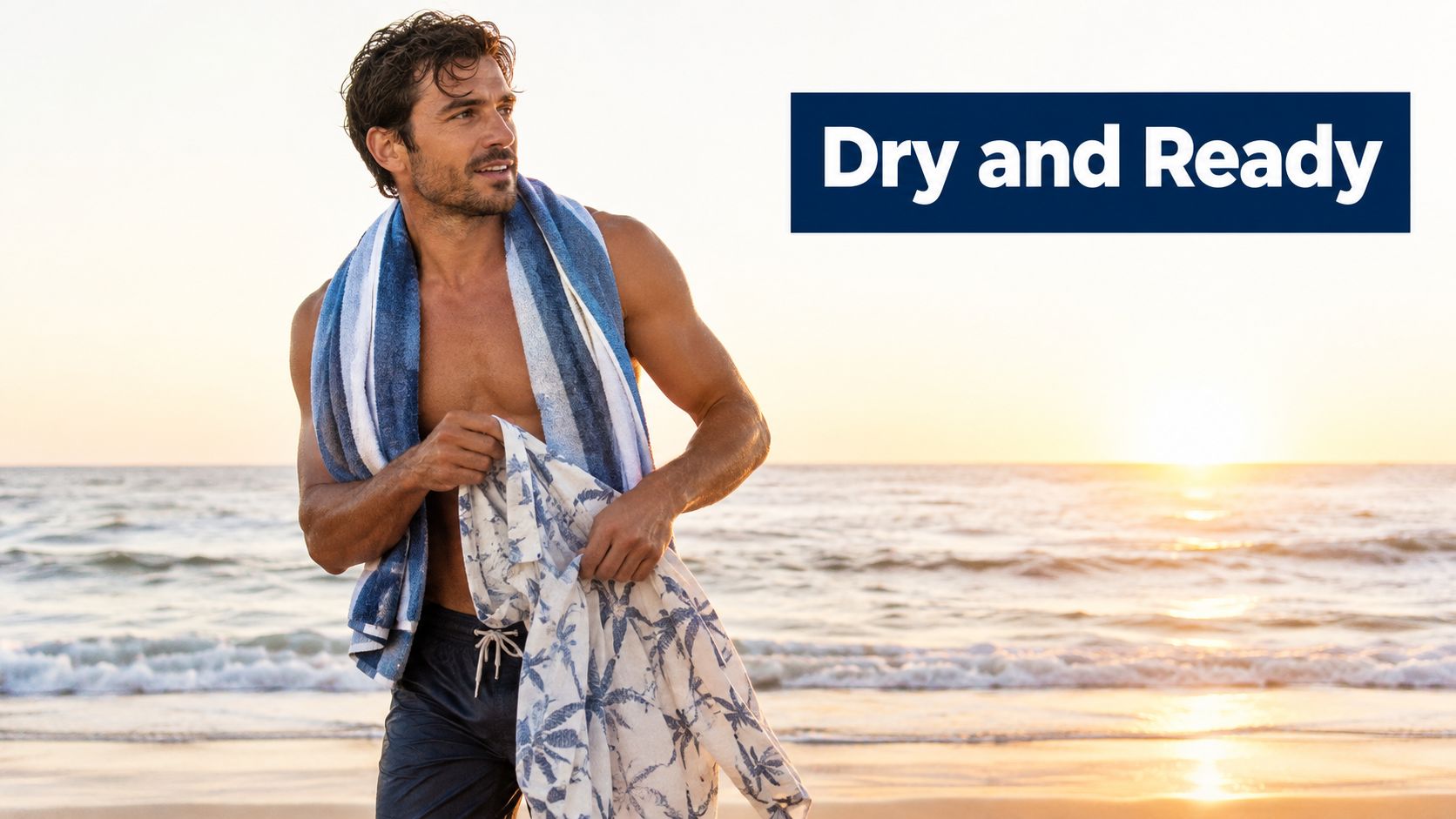
Cold water drains body heat up to 25 times faster than cold air, so the post-surf transition deserves immediate attention to warmth and dryness, not just visual polish. NOAA's cold-water safety guidance supports treating this as a thermal transition first and a style decision second.
The parking-lot test
A good transition layer should make three things easier:
- Dry contact: It should move residual water away from the body or absorb it without becoming unmanageably heavy.
- Wind control: It should reduce the bite of coastal wind while leaving enough room for airflow.
- Social entry: It should look suitable for the drive home, the first drink, or an unplanned stop for food.
That's why a towel-lined shirt, robe, or substantial overshirt often beats the thinnest possible tee. It gives you a dry surface, a little insulation, and a clear visual signal that you've moved beyond the water without pretending you've arrived at a formal dinner.
The right piece also changes behavior. You stop tugging at wet swim shorts. You can walk with both hands free. You're more likely to stay for the conversation instead of making a fast exit because you're cold and uncomfortable. For a practical guide to that moment, post-surf comfort clothing is best understood as a category of transition gear, not a decorative beach layer.
Managing the Chill and the Heat at Once
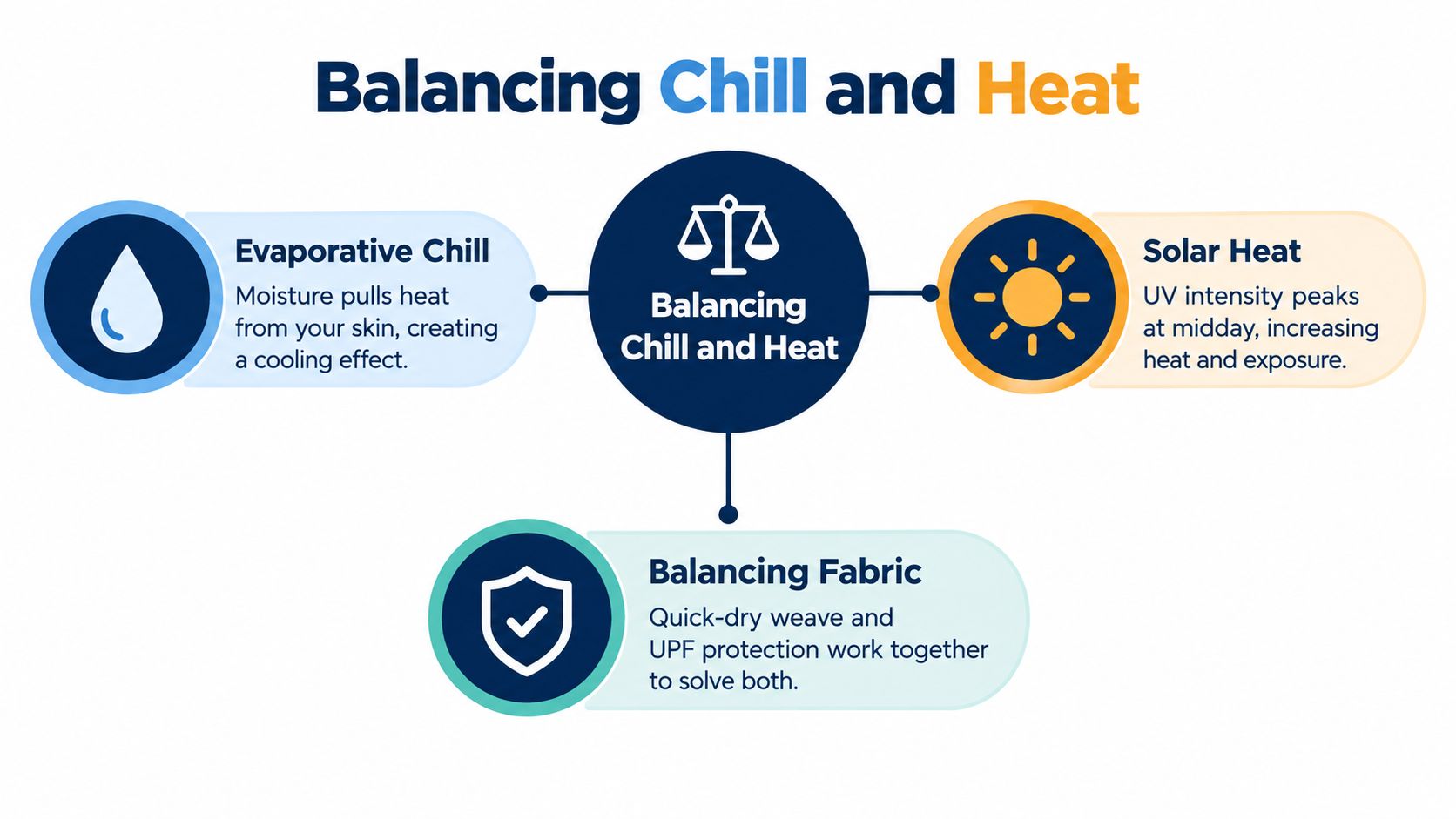
Beach-to-bar comfort depends on managing liquid sweat and heat transfer, not merely choosing a lightweight fabric. Recent textile research describes how moisture-spreading surfaces can increase evaporation, using latent heat loss to remove energy from the skin.
That creates the central coastal contradiction. Evaporation can make you feel chilled immediately after swimming, while direct sun and humid air can make the same garment feel hot minutes later. A shirt that only absorbs water may become heavy. A shirt that only sheds water may leave you cold when you're standing in the wind.
The water-to-boardwalk rule
Use the transition in a deliberate sequence:
- Get safely ashore before handling bags, phones, or extra layers. In-water safety equipment remains more important than any shirt pocket or robe feature.
- Remove the wettest layer. A soaked swim top or shirt keeps pulling heat from your skin as it evaporates.
- Put dry contact against the body. A lining or interior surface that manages residual water is more useful than a garment that only looks dry from the outside.
- Add wind protection without sealing in heat. Open fronts, side ventilation, and breathable construction help prevent the swing from chilled to overheated.
- Adjust as the setting changes. Wear the layer closed while walking into the wind, then open it at the café or bar.
Why “lightweight” can fail
A very light fabric may dry quickly, but that doesn't automatically make it comfortable. If it clings to damp skin, stretches open during movement, or offers little coverage from the sun, you'll spend the rest of the afternoon compensating with posture, sunscreen, or another layer.
A useful shirt spreads moisture across a wider outer surface, lets air move through the construction, and avoids a saturated inner zone. Ventilation at the underarms and side seams can matter as much as the fiber itself. A towel-like interior can improve the first minutes after swimming, but the designer must balance absorbency against garment weight, drainage, and drying time.
For a warmer coastal wardrobe, this beach hoodie for men shows the broader principle. The useful piece is the one that helps you manage changing conditions without forcing a complete outfit change every time the sun moves behind a cloud.
Choosing the Right Fabric for Your Climate
Fabric choice should follow the climate and the activity, not a vague promise that one material is always superior. Terry, linen, cotton, and synthetic blends each solve a different part of the beach-to-street problem.
| Fabric | What it does well | Where it can disappoint |
|---|---|---|
| Terry | Absorbs residual water and creates a comfortable post-swim interior | Adds weight and can take longer to dry |
| Linen | Breathes well and suits hot, relaxed social settings | Wrinkles easily and may offer limited opacity when wet |
| Cotton | Feels familiar, soft, and comfortable in dry conditions | Can retain water and become slow to dry |
| Synthetic blends | Can support rapid drying, stretch, and wrinkle resistance | May retain odor or shed fibers as the garment ages |
Terry works best when the first priority is getting out of wet swimwear. It's the towel you can wear, especially for a walk from the beach to the car or a quick change before a drink. The trade-off is mass. A dense pile can feel luxurious, but it's less convenient when you're packing light or moving through humid weather.
Linen is the natural choice for a hot afternoon that has already moved beyond swimming. It allows air movement and looks appropriate with swim shorts, trousers, or sandals. It doesn't absorb like terry, though, and a loose linen shirt may become transparent or cling when soaked.
Cotton remains comfortable for dry beach days and casual layering. It's less convincing as the only post-surf solution because water can remain trapped in the fabric. Synthetic blends often offer better drying behavior and wrinkle resistance, but you should evaluate the finished garment rather than accepting a generic “quick-dry” label.
Coverage changes when fabric gets wet
UPF is a measured textile-performance specification, not a style description. It expresses the ratio of effective ultraviolet radiation incident on a fabric to the amount transmitted through it, and it doesn't tell you how long you can stay in the sun without burning. In the United States, labeling connects with recognized testing and preparation standards, including AATCC and ASTM guidance summarized in ASTM D6603.
Wetting can substantially reduce protection for some fabrics, reportedly by as much as half, so a surf-to-sand shirt should retain useful coverage when damp. Dense construction, darker coloration, and a stable fit generally help, while aggressive stretching can open spaces between yarns.
Practical rule: Choose documented UPF performance, long sleeves, a collar or high neckline, and enough room for movement that the fabric doesn't become highly tensioned.
For a balanced warm-weather option, linen-blend men's shirts can sit between a towel layer and a formal resort shirt. The correct choice depends on whether you're drying off, protecting yourself during a long walk, or trying to look ready for dinner.
The Social Technical Features That Matter
The most useful beach garments solve small social problems before they become interruptions. You're walking from the beach to a patio, one hand has a drink, the other is carrying sandals, and your phone is somewhere inside a bag beneath a towel. The better design keeps the essentials close without turning the outfit into expedition equipment.
Storage that respects the moment
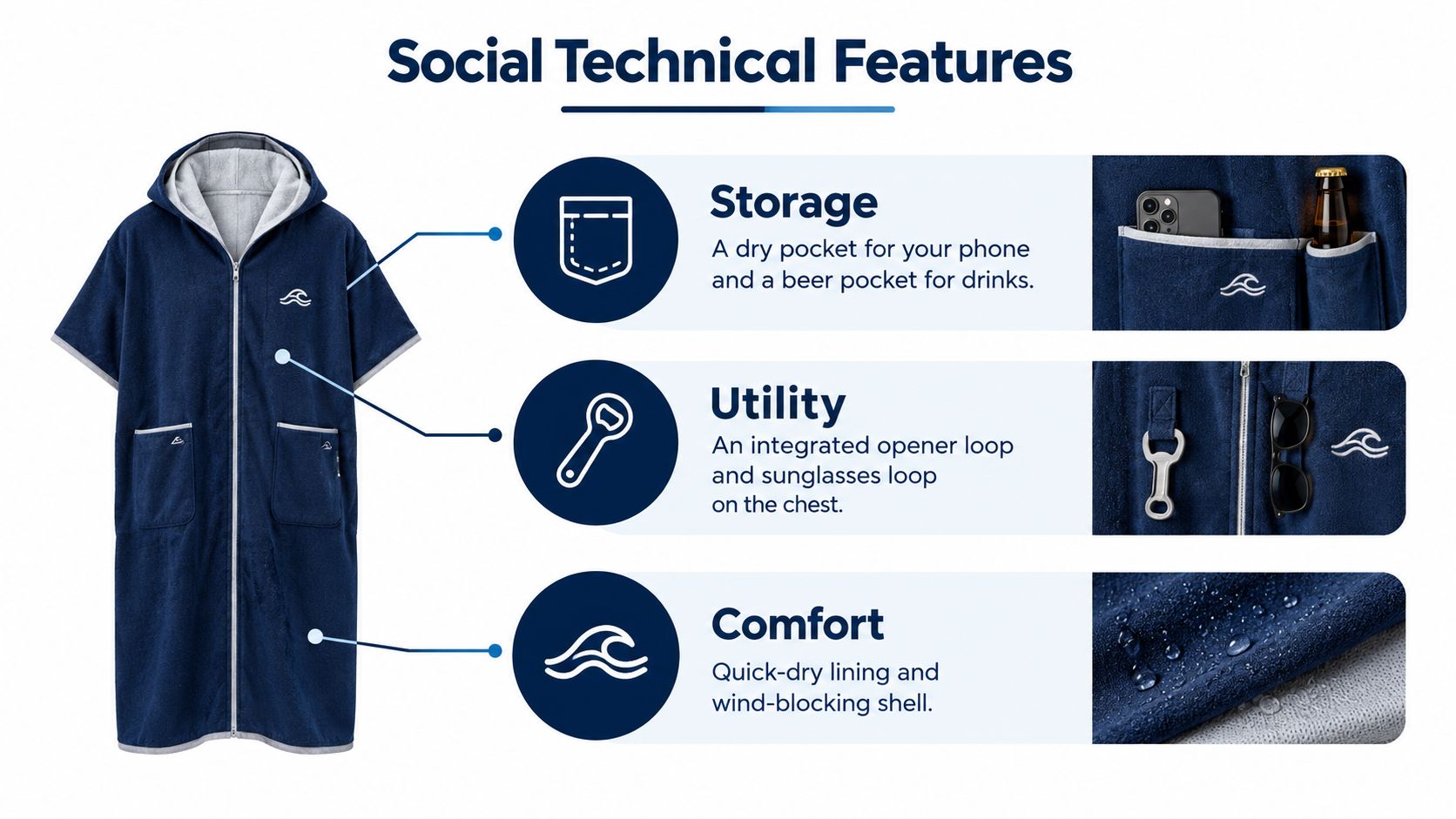
A concealed or dry pocket can hold a phone, card, or key after you're safely out of the water. It should not be treated as waterproof unless the manufacturer explicitly rates it that way. A pocket is a convenience for the transition, not a replacement for a dry bag, leash, flotation device, or other purpose-built safety equipment.
A bottle pocket or champagne pocket serves a different purpose. It keeps a drink from becoming another object to juggle while you greet friends. A bottle opener loop handles the tiny crisis that otherwise sends someone searching through a tote. A sunglasses loop keeps eyewear accessible when you move from glare into shade.
These details sound minor until you're carrying wet gear, opening a drink, and trying to join a conversation without dropping anything. Social technical design works when it disappears into the interaction.
The feature hierarchy
- Storage: A dry pocket for small valuables, plus room for the objects you need after the activity.
- Utility: A bottle opener loop and sunglasses loop that reduce unnecessary bag searches.
- Comfort: A quick-dry lining and wind-blocking outer layer that help manage the first minutes ashore.
The important boundary is timing. NOAA's coastal water-temperature guidance makes clear that beachgoers should plan around water conditions and use appropriate safety equipment. Once you're out, functional storage can make the social interval simpler.
A product such as the El Garibaldi robe fits the category. California Cowboy describes it as a towel-lined, water-absorbent robe with a dry pocket, bottle pocket, and sunglasses loop. It's an example of apparel designed for post-adventure use, not a substitute for technical gear in the water.
For a shirt-based version of the same idea, hidden-pocket shirts can reduce the number of loose items you carry from the sand to the street. The payoff isn't gadgetry. It's being socially confident enough to leave the phone alone and let serendipitous encounters happen.
Why Lighter Is Not Always Better
The lightest outfit often feels appealing at noon. Less fabric, less weight, fewer decisions. But direct exposure isn't the same as cool comfort, especially when the day includes walking, wind, reflected sunlight, and a long stretch between swimming and dinner.
A breathable overshirt can reduce direct sun exposure while keeping air moving around the body. It also gives you a visual transition from swimwear to social clothing. You can wear it open over trunks, close it for a drive, or push up the sleeves when the temperature rises.
The idea has support beyond styling logic. Research on textile structure and environmental shedding, including work published in Environmental Science & Technology, points toward the importance of construction, not just fiber labels. Compact woven structures and continuous filaments can release fewer microfibers than looser constructions during wear and laundering.
The right amount of structure
A successful overshirt should do several jobs without looking like a uniform:
- Create airflow: Room through the chest and sleeves helps prevent cling.
- Maintain coverage: The fabric should remain reasonably opaque when damp and stretched.
- Hold its shape: A little structure makes the move into a restaurant or beach club feel intentional.
- Layer cleanly: It should work over swim shorts, a tee, or a dry base layer.
California casual earns its reputation here. The outfit can look relaxed because the pieces are relaxed, not because they're careless. An open shirt over high-water shorts, with simple sandals and a hat, reads as prepared for the next stop without looking overplanned.
The best beach layer doesn't announce its technical features. It simply lets you stay longer, move easier, and stop fussing with your clothes.
Making Sustainable Choices at the Coast
A beach garment experiences more than one kind of wear. Ultraviolet exposure weakens materials, salt water leaves residue, sand abrades surfaces, and repeated washing affects construction. Judging a piece only by whether it contains recycled fiber misses the larger question of how long it stays useful and how it behaves at the end of its life.
A 2025 study reported that after 12 days of simulated sunlight exposure in seawater, 0.1 grams of polyester released approximately 14,400 to 47,400 microfiber fragments depending on color. The experiment doesn't prove that every beach shirt will release the same amount outdoors, but it does show why color, weave density, fiber type, care, and expected lifespan deserve attention. The reported findings are summarized by EurekAlert.
Build a lower-impact care routine
- Rinse after salt exposure: Remove salt and sand before they dry into the fabric and create additional abrasion.
- Wash only when needed: Airing and spot-cleaning can reduce unnecessary laundering when hygiene allows.
- Limit harsh heat: Excessive heat and tumble drying can accelerate breakdown in some garments.
- Inspect the weave: Replace or repair pieces when seams, lining, and surfaces begin to fail.
- Buy for repeated use: A durable garment that stays in rotation can be more practical than a trend piece that needs frequent replacement.
Color deserves a nuanced approach. The cited experiment found faster degradation for darker dyes under its test conditions, but that doesn't translate into a universal rule that light clothing is always the sustainable choice. Sun performance, construction, wash habits, and service life all matter together.
Sustainability also benefits from looking beyond clothing. Brands and consumers can evaluate the wider habits that shape personal care and travel, including a commitment to clean beauty that treats ingredient choices and packaging as part of responsible consumption. The useful mindset is consistent across categories. Ask what the product contains, how long it can serve you, and what happens when you're finished with it.
For a practical guide to sustainable men's beachwear, start with pieces that can handle the coast without becoming disposable after a single season. Durable construction isn't a complete environmental answer, but it's a more honest place to begin than a vague “eco” label.
Building Your Complete Beach-to-Bar Outfit
The strongest beach wardrobe is built around a transition layer, not a collection of isolated beach looks. Start with swim shorts that dry without clinging, then add a terry-lined shirt or robe for the immediate walk off the sand. Once you're dry and the afternoon heat settles in, switch to a breathable linen or cotton-blend overshirt that can stay open over the same shorts.
Complete the Look
- Base: High-water swim shorts with enough room to move and a clean shape beyond the shoreline.
- Transition: A terry-lined shirt or robe for absorbency, warmth, and post-surf comfort.
- Social layer: A breathable overshirt that provides coverage without trapping heat.
- Headwear: A simple cap or bucket hat for shade and a finished silhouette.
- Footwear: Sandals that can handle the walk from beach to boardwalk without looking like shower shoes.
- Small extras: A tee for the drive home, a koozie for the cooler, and a secure place for keys once you're out of the water.
The outfit should support the day's actual movement. You might begin with a morning surf, stop for coffee, spend the afternoon near the water, and finish on a cabin deck or restaurant patio. Packable accessories and compact storage help keep that sequence simple. For broader ideas on smarter travel gear from HYDAWAY, focus on pieces that reduce bulk without eliminating comfort.
The final test is social. Can you leave the water, holster your tech, carry what matters, and join the group without changing your entire personality along with your clothes? That's the point of practical California casual style. It gives you enough performance to stay comfortable and enough polish to look ready for whatever happens next.
California Cowboy makes shirts, robes, and outerwear for the stretch after the adventure, including towel-lined coastal layers, practical storage, and relaxed West Coast silhouettes. Visit California Cowboy to build a beach-to-bar kit that keeps you dry, socially confident, and ready to live a little more offline.

